4-in-1 Budgeting Toolkit: Planner, Excel & Savings Plan

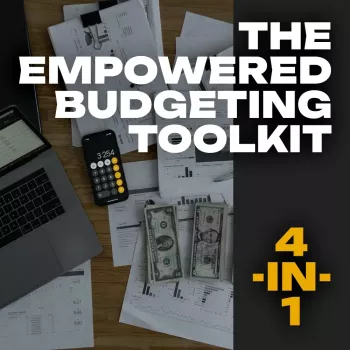
The Empowered Budgeting Toolkit: A 4-in-1 Bundle for Monthly Spending, Savings Goals, and Wealth-Building Habits
The Empowered Budgeting Toolkit is a bundled system designed to make budgeting feel clear, trackable, and motivating. It combines a structured budget planner with an Excel guide for month-to-month visibility, practical savings and wealth strategies, and guided affirmations to reinforce consistent money habits without relying on willpower alone. The result is a simple workflow you can repeat—so your plan doesn’t disappear after week one.
What the bundle is designed to solve
- Unclear monthly cash flow: create a simple view of income, fixed bills, variable spending, and true discretionary money.
- Inconsistent tracking: use repeatable categories and a monthly routine so spending data stays comparable over time.
- Savings goals that stall: translate goals into weekly or per-paycheck targets with built-in check-ins.
- Money anxiety and avoidance: pair numbers-based planning with mindset reinforcement to reduce friction and improve follow-through.
If you want additional budgeting basics and frameworks, the Consumer Financial Protection Bureau (CFPB) budgeting resources offer helpful reference points for getting started and staying realistic.
What’s included in the 4-in-1 Toolkit
This 4-part system is designed to cover the full cycle: plan, track, prioritize, and follow through.
- Budget planner materials to plan a month before it starts and review it after it ends.
- Excel guidance to set up a repeatable monthly expense system with totals, category views, and trends.
- Savings and wealth-building strategies to prioritize debt payoff, emergency funding, and long-term goals.
- Guided affirmations for wealth to support consistent habits, intentional spending, and goal alignment.
Toolkit components at a glance
| Component | Primary purpose | Best for | Typical use time |
|---|---|---|---|
| Budget Planner | Plan, assign, and review monthly spending | Anyone who wants structure without guesswork | 20–30 minutes weekly |
| Excel Guide | Track expenses and visualize patterns over time | People who prefer spreadsheets and automation | 10–15 minutes, 2–3x/week |
| Savings & Wealth Strategies | Prioritize goals and build a step-by-step plan | Goal-driven savers and debt payoff planners | 30–45 minutes to set up, then monthly |
| Guided Affirmations | Build a supportive money mindset and reduce avoidance | Anyone who struggles with consistency or money stress | 5–10 minutes daily |
Recommended bundle (in stock)
Get the complete system here: The Empowered Budgeting Toolkit | 4-in-1 Bundle| Budget Planner & Excel Guide| Monthly Expense Savings, Wealth Strategies & Guided Affirmations for Wealth.
How to set it up in about 30 minutes
- Step 1: List monthly take-home income and pay dates to anchor the plan to real cash flow.
- Step 2: Add fixed expenses (rent/mortgage, insurance, subscriptions) and confirm due dates.
- Step 3: Choose 8–15 variable categories (groceries, gas, dining, personal, kids, pets) to keep tracking realistic.
- Step 4: Set one primary goal for the month (emergency fund, debt, sinking fund) and define the target amount.
- Step 5: Create a weekly check-in rhythm (a consistent day and time) to log expenses and adjust the plan.
- Step 6: Select 1–2 affirmations that match the goal (consistency, patience, boundaries, confidence) and pair them with the check-in routine.
If your take-home pay changes due to withholding, the IRS Tax Withholding Estimator can help you understand what “real” monthly cash flow may look like before you lock in targets.
Monthly expense tracking that stays sustainable
- Keep categories stable for at least 3 months so trends become visible and decisions get easier.
- Track the “big three” first: housing, transportation, and food—small wins often come from improving these before micro-optimizing.
- Use notes for one-off events (travel, medical, gifts) so they don’t distort everyday spending patterns.
- Plan for irregular expenses with sinking funds (annual fees, car maintenance, holidays) to avoid surprise credit card use.
- Run a quick end-of-month review: what was underestimated, what can be reduced, what should be planned for next month.
When debt is part of the plan, reliable guidance matters. The Federal Trade Commission (FTC) consumer resources provide practical education on debt, credit, and common pitfalls to avoid.
Savings and wealth strategies to pair with your budget
Guided affirmations for wealth: turning planning into consistent action
For many people, consistency improves when stress and sleep improve, too. If winding down is the missing piece in your routine, pair your weekly money reset with Sleep Reset: Guided Audio Course for Restful Nights – 7-Day Sleep Meditation, Deep Relaxation, Insomnia Relief.
Who this toolkit fits best
Common setup mistakes and quick fixes
FAQ
Does this work for irregular income or freelancing?
Yes. Start with a baseline using your last 3–6 months average take-home pay (or a lean “minimum month”), prioritize essentials first, and use a buffer and sinking funds to absorb swings. Weekly check-ins help you adjust quickly when a smaller or larger payment hits.
Is the Excel portion difficult if spreadsheets are new?
It’s guided and can be kept simple at the start: income, fixed bills, and a limited set of categories. Once the habit is steady, you can expand into trends and deeper breakdowns without changing your overall system.
How long does it take to see progress using a monthly budget system?
Most people feel increased clarity within the first month, spot category improvements by months two to three, and build stronger savings momentum around the 90-day mark. Consistency matters more than perfection—small course-corrections compound quickly.











Leave a comment