Pet Travel Packing Checklist: Safer Trips for Dogs & Cats
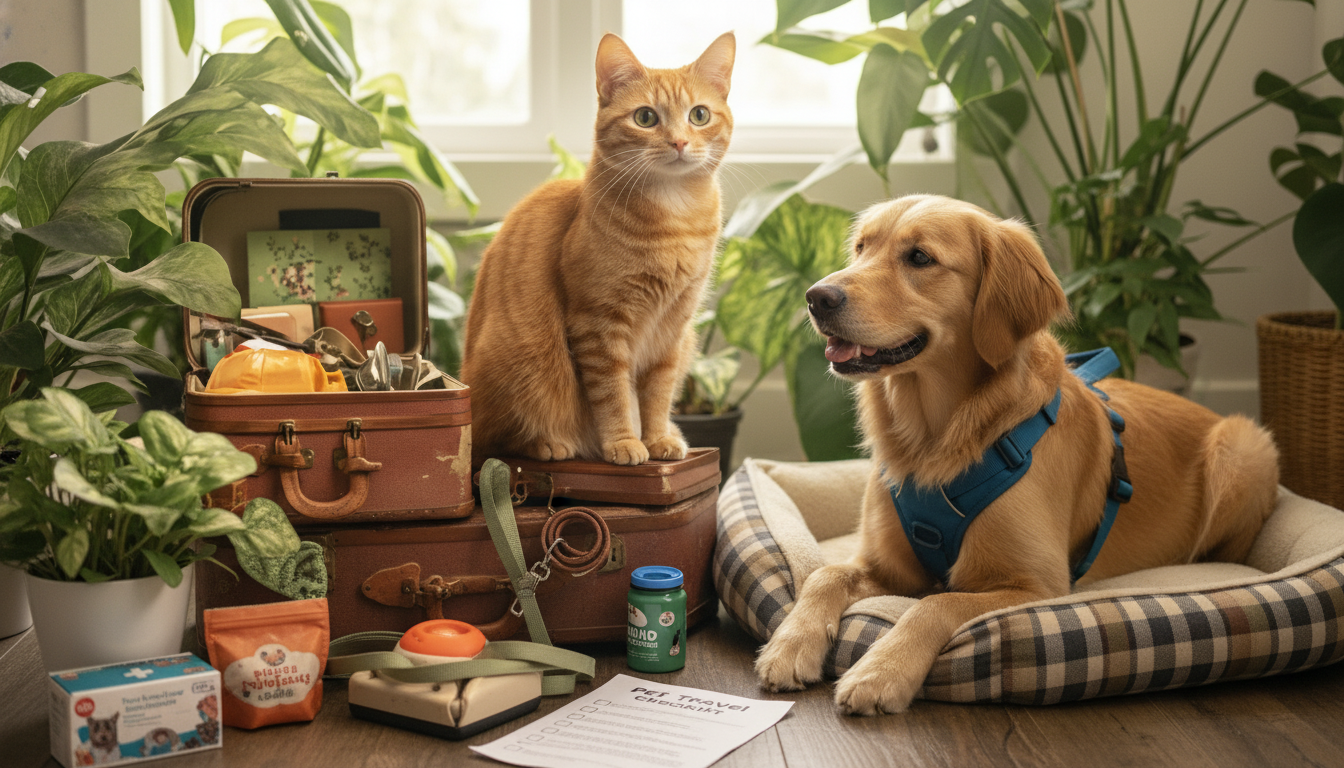
Pet Travel Essentials Checklist for Safe Trips: Road Trip & Vacation Packing for Dogs and Cats
Travel runs smoother when a pet’s needs are planned like a mini “go-bag”: safety first, comfort second, and paperwork always within reach. A consistent packing routine helps prevent common travel-day problems—missed medications, forgotten ID, stress in new spaces, or messy accidents—whether you’re driving across town, flying to a new state, or checking into a cabin near hiking trails.
Before You Pack: Quick Safety and Health Prep
Start with the items that are hardest to fix once you’ve left home: identification, health readiness, and destination rules.
- Confirm identification: Ensure collar tags have a current phone number, microchip registration is updated, and keep a recent photo of your pet on your phone.
- Schedule a vet check if needed: If your pet has any health concerns—or you’re traveling long distance, crossing borders, or heading into extreme heat/cold—ask your veterinarian what to watch for.
- Ask about motion sickness and anxiety: Your vet can advise on calming strategies, anti-nausea options, and parasite prevention based on season and destination.
- Research local rules: Confirm pet-friendly lodging policies, breed/size limits, leash laws, and documentation requirements before booking.
- Practice gear at home: Short, positive sessions with the carrier, crate, or harness can reduce travel-day resistance and stress.
For official travel requirements and health certificate guidance, review CDC guidance for traveling with pets and USDA APHIS pet travel resources.
Core Packing List: The Everyday Must-Haves
Think in categories so you can spot gaps quickly: food/water, comfort, cleanup, temperature support, and health basics.
- Food and water plan: Pack enough for the full trip plus 1–2 extra days in case of delays.
- Feeding kit: Portable bowls, pre-measured portions, treats for training/reassurance, and a sealable container to keep food fresh.
- Comfort items: A familiar blanket, small bed or mat, and a favorite toy to reduce anxiety in new environments.
- Cleanup supplies: Poop bags, litter/scoop for cats (as needed), enzyme cleaner wipes, paper towels, and a small trash bag roll.
- Temperature and shade support: Cooling mat or jacket for heat, sweater for cold, and a car window shade when sun exposure is strong.
Fast-Grab Packing Checklist by Category
| Category | What to Pack | Notes for Dogs | Notes for Cats |
|---|---|---|---|
| Safety & ID | Collar/harness, tags, microchip info, recent photo | Crash-tested harness or secured crate | Secure carrier; avoid opening in unfamiliar places |
| Food & Water | Food, treats, bottled water, bowls | Chew-safe water bottle or spill-resistant bowl | Bring familiar food to prevent stomach upset |
| Health | Meds, flea/tick prevention, first-aid basics | Paw balm if hiking; tick remover | Hairball support or calming supplements if vet-approved |
| Comfort | Blanket, bed/mat, toy | Long-lasting chew for downtime | Hideaway blanket; pheromone wipe/spray if used |
| Cleanup | Bags, wipes, paper towels, enzyme cleaner | Extra leash towel for muddy paws | Litter, scoop, disposable tray liner |
| Documents | Vaccination record, vet contact, insurance info | Boarding/daycare requirements vary | Airline paperwork may be stricter |
If you prefer a single, repeatable page you can print for each trip, use the Printable pet travel essentials checklist and planner to keep packing, stops, meals, and meds in one place.
Travel-Day Setup: Car Safety, Breaks, and Routine
Travel day is about preventing distractions, preventing escapes, and keeping your pet’s body comfortable enough to settle.
- Secure your pet properly: Use a crate anchored in the vehicle or a crash-tested harness connected to a seat belt system. Avoid front seats with airbags, and never allow pets to roam freely.
- Plan predictable stops: Build in water breaks and short, leashed movement at shaded areas. Never leave pets unattended in parked vehicles.
- Maintain routine where possible: Offer smaller meals before departure and stick to familiar timing for meals and potty breaks to reduce stomach upset.
- Pack an easy-access pouch: Keep wipes, bags, treats, water, and a towel reachable without unloading the trunk.
- Protect the car interior: A seat cover or waterproof liner makes cleanup easier and can lower stress if accidents happen.
For additional travel safety guidance, the American Veterinary Medical Association (AVMA) travel tips are a helpful baseline.
Lodging and Public Spaces: Minimizing Stress and Risk
Most travel mishaps happen during transitions—unloading the car, opening a hotel door, or stepping into a busy lobby. A few habits reduce risk fast.
Special Situations: Flights, Long Drives, Heat, and Outdoor Trips
When your route includes scenic stops and trail-heavy days, the Digital travel guide for planning outdoor stops can help you map out nature-focused breaks while keeping your itinerary organized.
Printable Planning: Turn the Checklist Into a Repeatable System
Printable Pet Travel Planner and Checklist
FAQ
What documents are commonly needed when traveling with a dog or cat?
Common documents include rabies and vaccination records, any airline or destination-required health certificates, microchip details, and your veterinarian’s contact information. Requirements vary by state, country, and carrier, so confirm rules before booking and again close to departure.
How often should pets take breaks on a road trip?
Many pets do well with breaks about every 2–3 hours, but age, health conditions, and weather can change what’s appropriate. Offer water, a short leashed walk or litter check, and watch for signs of stress or overheating.
What’s the safest way for a pet to ride in a car?
The safest options are a secured crate anchored in the vehicle or a crash-tested harness connected to a seat belt system. Avoid laps and front seats, and prevent roaming so your pet can’t become a projectile in a sudden stop or distract the driver.











Leave a comment